10 Best Dive Spots in Palau: Complete Guide to Micronesia's Diving Paradise
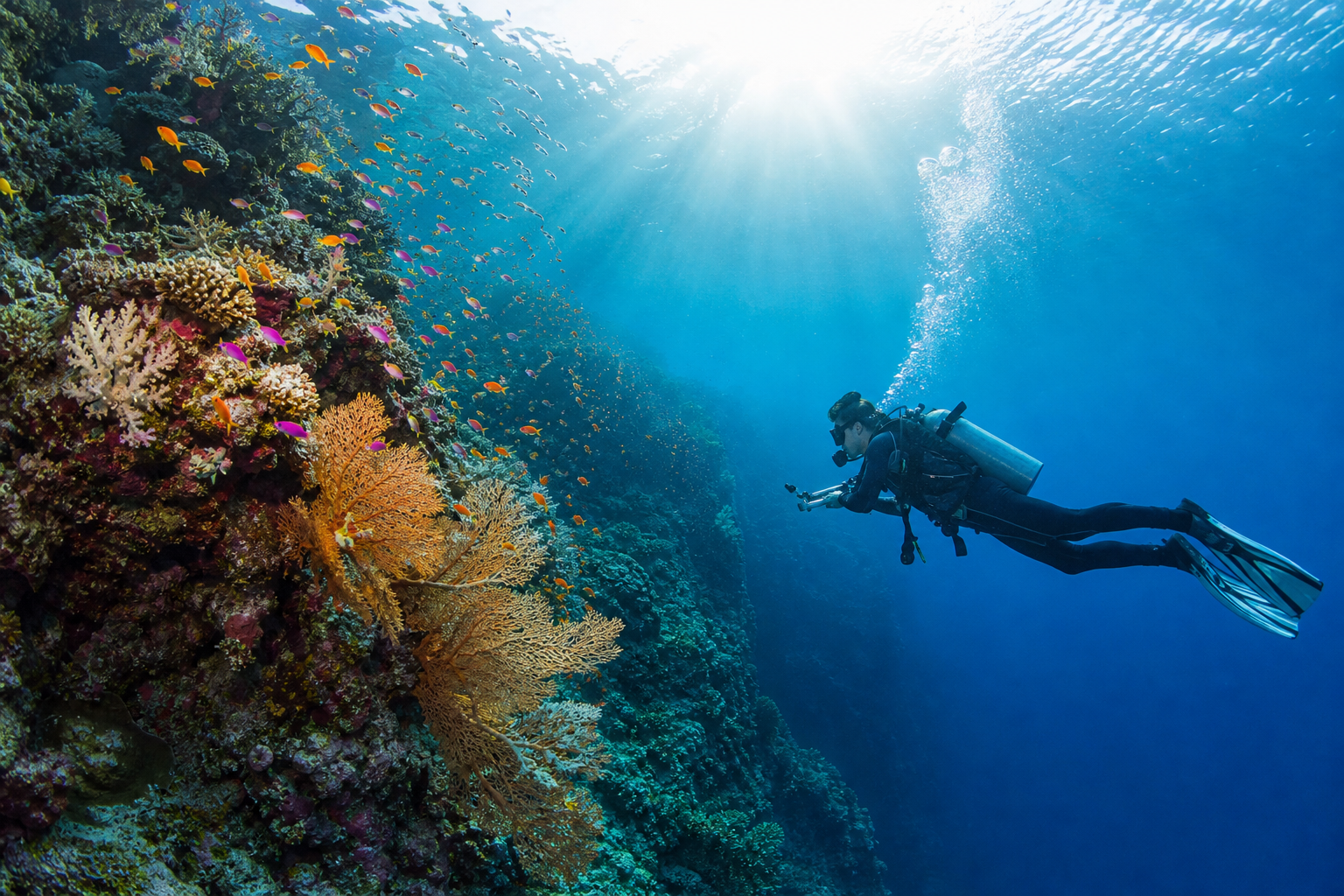
Palau is a bucket-list destination for serious divers. This Micronesian archipelago delivers adrenaline-pumping drift dives with grey reef sharks, manta cleaning stations, WWII wrecks, coral walls that drop into the deep Pacific, and the famous Jellyfish Lake snorkel experience.
This guide covers the 10 best dive spots in Palau — what makes each site special, who it suits, and how to plan a liveaboard or land-based trip from Koror.
What Are the 10 Best Dive Spots in Palau?
The essential Palau dive sites are Blue Corner, German Channel, Ulong Channel, Big Drop-Off, Siaes Tunnel, Iro Maru, Chandelier Cave, Peleliu Express, Jake Seaplane and New Drop-Off.
The best time to dive Palau is generally November through April, when seas are calmest and visibility often exceeds 30 meters. Water temperature stays around 27–29°C year-round.
Top 10 Dive Spots in Palau (Detailed)
1. Blue Corner
Blue Corner is Palau's most iconic dive — and one of the greatest drift dives on the planet. A plateau at the edge of the Philippine Sea attracts grey reef sharks, Napoleon wrasse, trevally and barracuda in strong current. Divers hook onto the reef with a reef hook (where permitted) and watch the action unfold in crystal water.
Best for: Experienced divers comfortable with current and depth (15–30 m). Not for beginners.
2. German Channel
A man-made channel blasted through the reef during the German colonial era, German Channel is now Palau's premier manta ray cleaning station. Mantas visit sandy patches where cleaner wrasse remove parasites — often in the morning. Snorkelers and divers both come for this spectacle.
Best for: All certified levels on calm days. Bring a reef stick only if your guide approves — never touch mantas.
3. Ulong Channel
Ulong Channel offers a thrilling drift through a coral-lined channel out to the open ocean. Sharks, jacks and snapper congregate when the tide runs. Timing the slack or incoming tide with your dive operator is critical for safety and marine life density.
Best for: Advanced divers with good air consumption and drift experience.
4. Big Drop-Off (Ngemelis Wall)
Big Drop-Off is a sheer wall that begins in the shallows and plummets hundreds of meters. Soft corals, sea fans and schooling fish cover the face while turtles and reef sharks cruise the blue. Excellent visibility and relatively mild current compared to Blue Corner.
Best for: Open Water divers and above. Great for photography.
5. Siaes Tunnel
Siaes Tunnel is a cathedral-like swim-through: divers descend through a large tunnel opening and exit onto the wall. Light beams and schooling fish create an unforgettable atmosphere. Buoyancy control is essential to protect fragile corals at the entrance.
Best for: Advanced Open Water with cavern training or experienced guided divers.
6. Iro Maru Wreck
The Iro Maru is a Japanese fleet oiler sunk during WWII, resting upright and encrusted with hard and soft corals. Penetration is possible in some sections for trained wreck divers; the exterior alone offers macro life, lionfish and schools of baitfish.
Best for: Wreck enthusiasts. Wreck specialty recommended for penetration.
7. Chandelier Cave
Chandelier Cave is a unique air-filled cave system with four chambers — divers surface inside to see stalactites by flashlight. An otherworldly experience unique to Palau. Strict guide protocols apply; not suitable for claustrophobic divers.
Best for: Certified divers on guided cave tours. Snorkel option at entrance only on some trips.
8. Peleliu Express
Near historic Peleliu Island, Peleliu Express is a high-voltage drift with strong current and large shark populations — grey reef sharks, whitetips and occasional hammerheads in season. One of Palau's most advanced sites, often saved for the second half of a trip when your confidence is high.
Best for: Experienced drift divers only. Check dive insurance before advanced trips.
9. Jake Seaplane
The Jake Seaplane sits intact in shallow water — a Japanese Aichi E13A floatplane resting on the sandy bottom. Easy to explore and excellent for wreck photography without deep penetration. Often combined with nearby reef dives.
Best for: Open Water+. Shallow and photogenic.
10. New Drop-Off
New Drop-Off rivals Big Drop-Off with lush coral coverage, turtles and pelagic fish in the blue. Slightly less crowded on some liveaboard itineraries. A excellent final dive for wide-angle photographers who want colour and depth without extreme current.
Bonus: Jellyfish Lake (Ongeim'l Tketau) is snorkel-only — millions of harmless golden jellyfish. Permit required; closed periodically for conservation.
Palau Dive Sites Comparison
| Site | Season | Level | Highlight |
|---|---|---|---|
| Blue Corner | Nov–Apr | Adv | Sharks, drift |
| German Channel | Nov–Apr | OW+ | Manta rays |
| Ulong Channel | Nov–Apr | Adv | Drift, sharks |
| Big Drop-Off | Year-round | OW+ | Wall, turtles |
| Siaes Tunnel | Nov–Apr | AOW | Tunnel swim-through |
| Iro Maru | Year-round | AOW | WWII wreck |
| Chandelier Cave | Year-round | OW+ | Air chambers |
| Peleliu Express | Nov–Apr | Expert | Strong current |
| Jake Seaplane | Year-round | OW+ | Shallow wreck |
| New Drop-Off | Nov–Apr | OW+ | Wall, corals |
How to Plan a Palau Diving Trip
- Liveaboard vs resort: Most divers choose 7–10 night liveaboards to hit Blue Corner, German Channel and Peleliu efficiently. Land-based diving from Koror works for shorter trips.
- Certification level: Palau rewards Advanced Open Water and drift experience. Build skills before booking current-heavy itineraries.
- Conservation fees: Palau charges environmental fees and permits (including Jellyfish Lake). Budget accordingly.
- Combine with training: Consider Advanced Open Water or nitrox before you go to extend bottom time on reef hooks.
FAQ: Diving in Palau
Is Palau suitable for beginner divers?
Palau is best for intermediate and advanced divers. Some shallow sites exist, but the country's fame comes from current and depth. Build experience in calmer destinations first.
When is the best time to dive Palau?
November to April offers the calmest seas and best visibility. July–September can be windier with lower visibility but fewer tourists and lower prices.
How much does diving in Palau cost?
Liveaboard trips typically run $3,000–$5,000+ USD per week excluding flights. Day diving from Koror is cheaper but still premium compared to Southeast Asia.
Related Guides
Plan Your Next Dive Adventure
Explore dive destinations worldwide and compare courses on Be Underwater.
Best Places to Scuba Dive Worldwide