Best Cenote Dives Near Playa del Carmen: Complete Guide to the Riviera Maya's Top Sites
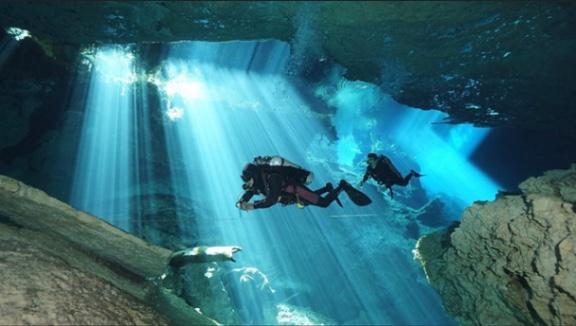
The stretch of jungle between Playa del Carmen and Tulum sits on top of the largest network of flooded caves on Earth. Below the surface, hundreds of cenotes — natural sinkholes connecting the Yucatan's underground rivers — offer some of the clearest, most unusual diving anywhere: glassy freshwater, dramatic light beams, stalactites, and haloclines where fresh and salt water meet and blur like heat haze.
This guide covers the best cenote dives near Playa del Carmen: what makes each site different, who it suits, and the difference between cavern and cave diving. It pairs well with our wider best dive spots in Mexico guide, our best places to scuba dive worldwide roundup, and our overview of deep certification for divers looking to go beyond cavern limits.
What Are the Best Cenotes to Dive Near Playa del Carmen?
The top cenotes near Playa del Carmen are Dos Ojos and its Barbie Line, the Chac Mool (Little Brother) system, Taak Bi Ha, Chikin Ha, Dreamgate, The Pit, Angelita for its famous hydrogen sulfide cloud, the beginner-friendly Gran Cenote, Car Wash (Aktun Ha), and Casa Cenote, a mangrove-lined shallow dive near Tulum.
Most of these sites are dived in cavern mode, which stays within natural daylight and a short swim of an open exit, so an Open Water certification plus a qualified cavern guide is usually enough. True cave diving — following permanent guideline into the dark zone beyond daylight — requires separate technical cave training and is a different activity entirely.
Cavern Diving vs Cave Diving: What's the Difference?
The two terms get mixed up constantly, and the difference matters for who can dive where:
- Cavern diving: Stays within sight of natural light and within about 60 meters (200 ft) of the surface/exit, following a permanent guideline the whole time. Divers with an Open Water certification can join, provided they dive with a certified cavern or cave guide who manages the route, line, and lighting. This is how the vast majority of visitors experience Dos Ojos, Gran Cenote, Chac Mool, Car Wash, and similar sites.
- Cave diving: Goes beyond the light zone into full overhead darkness, often far from any exit. It requires dedicated cave certification (Full Cave or equivalent), specialized equipment configuration, and extensive practice with gas management and lost-line procedures. Cave diving is a separate discipline from recreational scuba, not an extension of it.
In short: If you are Open Water certified, you can still dive most of the region's famous cenotes in cavern mode with a qualified guide. Save true cave diving for after specific technical training.
10 Best Cenotes Near Playa del Carmen (Detailed)
1. Dos Ojos
Dos Ojos ("Two Eyes") is the best-known cenote in the region, named for its pair of connected sinkholes. The Barbie Line and the Bat Cave passage are the two classic cavern routes: wide, well-lit galleries hung with stalactites, with the famous Batcave air pocket where divers can surface mid-dive to see resident bats overhead.
Visibility is typically 30+ meters in freshwater, and the site is shallow throughout (rarely below 10 meters), which keeps bottom time long. It is one of the most accessible cavern dives for Open Water divers with a certified guide.
Best for: First-time cenote divers and underwater photographers. Two dives here (Barbie Line + Bat Cave) make a full morning.
2. Chac Mool (Little Brother)
Chac Mool cenote, sometimes called Kukulkan or "Little Brother" for its proximity to the larger Kukulkan system, is famous for a dramatic halocline — the shimmering layer where fresh and salt water meet and refract light like a mirage. Wide, cathedral-like rooms with tall columns and beams of sunlight make it one of the most photogenic cenotes near Playa del Carmen.
Quick info: Shallow, cavern-only route suitable for Open Water divers with a cavern guide. Bring a wide-angle lens if you dive with a camera.
3. Taak Bi Ha
Cenote Taak Bi Ha (also spelled Tak Be Ha or Tak Be Lum) is a quieter alternative to the busier Dos Ojos area, with the same underground river system feeding in nearby. Expect narrower cavern passages, dense stalactite formations, and noticeably fewer divers on the line — a good pick if you want a calmer cavern experience without sacrificing decoration.
Best for: Divers who have already done a busier cenote like Dos Ojos and want a less crowded cavern dive nearby.
4. Chikin Ha
Cenote Chikin-Ha is part of the same jungle system as Kukulkan and Taak Bi Ha, and is well known among cavern divers for its own version of the shallow, brightly lit "Barbie Line" passage — a crystal-clear swim-through lined with fine formations that has become one of the most photographed sections of the local cave system.
The open cenote pool above is also popular with snorkelers, so early morning dives tend to have calmer, less disturbed water for better visibility.
Tip: Ask your dive shop whether they route Chikin Ha or Dos Ojos for the "Barbie Line" — both cenotes have sections that go by similar names locally.
5. Dreamgate
Dreamgate cenote is one of the deeper cavern-accessible cenotes in the area, with a wide, open pool that funnels down toward a pronounced halocline and dark, tannic freshwater layered above clearer saltwater below. The scale of the main chamber and dramatic light shafts make it a favorite for divers who have already done Dos Ojos or Chac Mool and want something moodier.
Best for: Certified divers comfortable with depth and low-light conditions; not usually the first cenote on a trip.
6. The Pit
Part of the Dos Ojos system, The Pit is one of the deepest and most dramatic cenotes in the region, with a vertical shaft that drops far below cavern limits. Cavern divers descend through a striking halocline and a hydrogen sulfide cloud partway down, with sunbeams piercing the open shaft from above and a scatter of leaves and branches suspended below the cloud layer.
Quick info: Cavern portion suits Advanced Open Water divers comfortable with depth and low visibility inside the sulfide layer; the full pit floor is cave-diver territory only.
7. Cenote Angelita
Angelita is famous for its underwater "river" — a dense hydrogen sulfide cloud sitting around 30 meters down that looks solid enough to walk on, with submerged tree branches poking through it. It is one of the most striking sights in the cenote circuit, but the depth and gas layer make it an experience for trained, comfortable divers rather than a casual first dive.
Best for: Advanced Open Water divers or above; not recommended as an introductory cenote dive due to depth and the disorienting sulfide layer.
8. Gran Cenote
Gran Cenote, just outside Tulum, is one of the most beginner-friendly sites in the region: shallow, well-lit, and packed with turtles that often surface alongside divers and snorkelers in the open pool. Cavern sections are wide and easy, with striking stalactite and stalagmite formations close to the entrance.
Best for: First-timers, families with snorkelers, and anyone wanting turtles in the mix. Arrive early to beat tour groups.
9. Car Wash (Aktun Ha)
Named for its former life as a spot where locals washed their trucks, Car Wash (Aktun Ha) combines an open, lily-pad-covered pool with a cavern zone featuring fallen tree trunks, striking haloclines, and — seasonally — patches of vivid green algae light that give the site a surreal, almost neon look.
Tip: Shallow and easy, making it a good second or third cenote dive after Gran Cenote or Dos Ojos.
10. Casa Cenote
Casa Cenote, near Tulum, is technically an open-water lagoon rather than a traditional cave-system cenote, winding through mangroves with mixed fresh and saltwater. It is shallow throughout, often dived without an overhead-environment guideline, and known for small crocodile sightings in the mangrove channels (harmless at a respectful distance) alongside fish and the occasional turtle.
Best for: Relaxed, shallow dives or snorkeling; a good warm-up before a proper cavern day, or a light finish afterward.
Best Time to Dive the Cenotes Near Playa del Carmen
Cenotes are freshwater-fed and largely sheltered underground, so they are diveable year-round — unlike open-ocean sites, they are not really affected by seasonal storms or surface conditions. Water temperature stays fairly constant at around 24–26°C (75–79°F) throughout the year, so most divers are comfortable in a 3–5 mm wetsuit.
The main seasonal factor is rainfall: the drier months from roughly November to April tend to bring the clearest water, since heavy rain can wash more sediment and tannins into some cenote pools, especially right after a storm.
How to Plan Your Cenote Diving Day
- Go with a certified cavern or cave guide: Every cenote dive in this guide should be led by a guide with specific cavern/cave training — this is non-negotiable overhead-environment diving, even in the shallow, well-lit sections.
- Match sites to your certification: Gran Cenote, Dos Ojos, Car Wash and Casa Cenote suit Open Water divers; save The Pit and Angelita for once you are comfortable at depth, ideally with deep certification.
- Bring a wetsuit and a good light: Freshwater is noticeably cooler than the Caribbean Sea, and a primary dive light is essential in every cenote, even the brightest ones.
- Book two-tank cenote days: Most operators pair two cenotes back to back (for example Dos Ojos + The Pit, or Gran Cenote + Car Wash) — a convenient way to compare a beginner site with a more advanced one in a single trip.
- Combine with reef diving: Playa del Carmen and Cozumel offer excellent reef and wall diving as a contrast to the cenotes — see our best dive spots in Mexico guide for the wider region.
FAQ: Diving the Cenotes Near Playa del Carmen
Can I dive the cenotes with just an Open Water certification?
Yes, for most cenotes. Sites like Gran Cenote, Dos Ojos, Chac Mool, Car Wash and Casa Cenote are dived in cavern mode within natural daylight, which Open Water divers can join alongside a certified cavern or cave guide. True cave diving beyond the light zone requires separate technical cave certification.
Which cenote is best for a first-time dive?
Gran Cenote and Dos Ojos are the most beginner-friendly: shallow, brightly lit, easy cavern routes with excellent visibility. Gran Cenote also has a good chance of turtle sightings in the open pool.
What is a halocline and why does it matter in cenote diving?
A halocline is the blurry, shimmering layer where fresh and salt water meet without fully mixing. It briefly distorts vision and can feel disorienting the first time you pass through it — sites like Chac Mool and Dreamgate are known for particularly dramatic haloclines.
Do I need a wetsuit for cenote diving?
Yes. Cenote water sits around 24–26°C (75–79°F) year-round, noticeably cooler than the Caribbean, so most divers wear a 3–5 mm wetsuit for comfort during longer cavern dives.
Can I do night diving near Playa del Carmen or Cozumel?
Cenotes are not typically dived at night, since cavern protocols rely on natural daylight. Night diving in the region is a reef activity instead — Cozumel in particular runs regular night dives on its walls and reefs, separate from the cenote circuit. See our best dive spots in Mexico guide for reef and wall options.
Related Diving Guides
Find Dive Centers in Playa del Carmen
Compare cenote and cavern diving specialists in Playa del Carmen — read reviews, check prices and book your next cenote day.
Search Playa del Carmen Dive Trips