Best Cenotes for Diving in Mexico: 10 Top Cenotes
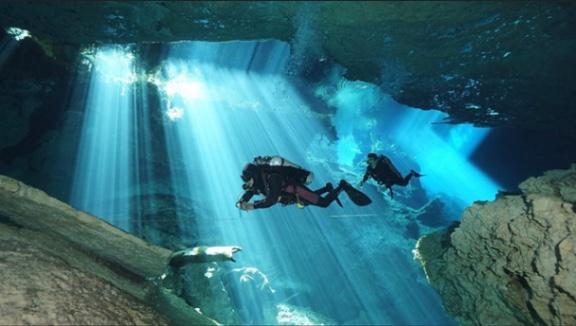
The best cenotes for diving in Mexico are Dos Ojos, Gran Cenote, Car Wash, Chac Mool, Kukulkan, Taj Mahal, Calavera and Tak Be Ha for Open Water divers in cavern mode, plus The Pit and Angelita for divers with deeper experience. Most are an easy trip from Tulum, Playa del Carmen or Puerto Aventuras, and many divers staying in Cancun reach them by transfer from the coast to the south.
The Riviera Maya sits on one of the largest flooded cave networks in the world. Cenotes are freshwater sinkholes that connect to it, with very clear water, light beams, stalactites and haloclines, where fresh and salt water meet and blur like heat haze. This guide covers the whole region. For site-by-site detail around Playa, read our cenote dives near Playa del Carmen guide, and for the wider country see best dive spots in Mexico.
The 10 Cenotes at a Glance
| Cenote | Nearest town | Level | What makes it special | Book |
|---|---|---|---|---|
| Dos Ojos | Tulum | Open Water OK (cavern) | Two connected sinkholes, clear water, light beams and a halocline; one of the most popular cavern tours. | Playa del Carmen dive centers |
| The Pit (El Pit) | Tulum | Advanced / deep experience | A deep, dramatic cenote with a hydrogen sulfide cloud and sunbeams; usually requires deep-dive experience. | Playa del Carmen dive centers |
| Angelita | Tulum | Advanced / deep experience | A hydrogen sulfide cloud that looks like a river running through the cenote, with tree branches poking out of it. | Playa del Carmen dive centers |
| Car Wash (Aktun Ha) | Tulum | Open Water OK (cavern) | Shallow, easy cavern with plenty of daylight and a lush, jungle-ringed pool. | Playa del Carmen dive centers |
| Gran Cenote | Tulum | Open Water OK (cavern) | Very beginner friendly, with stalactites, open-air swimming areas and a good chance of seeing turtles. | Playa del Carmen dive centers |
| Chac Mool | Playa del Carmen / Puerto Aventuras | Open Water OK (cavern) | Known for a dramatic halocline and decorated passages. | Playa del Carmen dive centers |
| Kukulkan | Playa del Carmen / Puerto Aventuras | Open Water OK (cavern) | Halocline and light play; connected to the Chac Mool system. | Playa del Carmen dive centers |
| Taj Mahal (Sac Actun) | Playa del Carmen / Puerto Aventuras | Open Water OK (cavern) | Part of the Sac Actun system, with large formations and good light in the cavern zone. | Playa del Carmen dive centers |
| Calavera | Tulum | Open Water OK (cavern) | Known as the Temple of Doom, a compact cenote with several openings in the ceiling. | Playa del Carmen dive centers |
| Tak Be Ha (Taak Bi Ha) | Playa del Carmen / Puerto Aventuras | Open Water OK (cavern) | A cavern with formations and a halocline, popular for its quiet, atmospheric passages. | Playa del Carmen dive centers |
Levels are typical. Each dive center and guide decides which routes it offers to which certification, so confirm when you book. Cenote lists by town are approximate because several systems connect.
Cavern vs Cave Diving: What You Need
Cavern diving means staying within sight of natural daylight, close to an exit, with a guide. Most cenote dive tours are cavern dives, and they usually require at least an Open Water certification. Some cenotes, like The Pit and Angelita, are deeper and are usually offered to Advanced Open Water divers or divers with deep-dive experience. If you plan to go further, our guides to the Open Water vs Advanced Open Water courses and deep certification explain the steps.
Cave diving goes beyond the daylight zone into overhead environments, and needs a cave certification and specific equipment. Reading about it here does not replace training: always follow your guide's briefing and stay within your certification.
Highlights Worth Knowing
- Angelita: a hydrogen sulfide cloud forms a layer at depth that looks like a river on the cenote floor. It is a striking, dark, deeper dive, so it is normally reserved for experienced divers.
- Light beams: in cenotes with an open ceiling, such as Dos Ojos and the Pit, sunbeams are most visible on sunny days around midday.
- Halocline: in Chac Mool, Kukulkan and other cenotes the line between fresh and salt water makes the view blurry as you cross it. Hold your buoyancy steady so you do not stir it up.
- Water temperature: cenote water is cooler than the Caribbean surface and stays fairly constant through the year.
When to Go
Cenote diving works year-round because you dive underground, away from ocean swell. Many divers pair a few cenote days with ocean dives in Cozumel or off Playa del Carmen. Our where to dive in December guide covers how the Riviera Maya looks in the dry season.
Book Cenote Dives on Be Underwater
Be Underwater is a marketplace: dive centers list their own courses and trips, and the center runs the dives. These Advanced Open Water courses include cenote dives and are listed by Deepdivemexico in Playa del Carmen. Prices are as listed on Be Underwater and vary by season.
- Advanced Open Water Course: Cenotes, Playa and Cozumel (from ~$552, listed on Be Underwater, varies by season)
- Advanced Open Water Course: 4 Cenote + 2 Reef Dives (from ~$552, listed on Be Underwater, varies by season)
- Advanced Open Water Course: 4 Reef + 2 Cenote Dives (from ~$478, listed on Be Underwater, varies by season)
Browse all options on the Playa del Carmen and Mexico pages.
FAQ: Diving Cenotes in Mexico
Can I dive cenotes with only an Open Water certification?
Usually yes, in cavern mode. Cavern diving means staying within sight of natural daylight, with a guide. Some cenotes, such as The Pit and Angelita, are normally offered only to divers with Advanced Open Water or deep-dive experience. Full cave diving needs a separate cave certification.
What is the difference between cavern and cave diving?
Cavern diving stays in the daylight zone, close to an open exit, and is done with a guide. Cave diving goes beyond the daylight zone into overhead environments and requires specific cave training and equipment.
When is the best time to dive the cenotes?
Cenote diving is possible year-round because the dives happen underground, and the water stays at a fairly constant temperature. Light beams are usually best on sunny days around midday. Surface weather mainly affects the ocean, not the cenotes.
Do I need to be a strong swimmer or experienced diver?
You need good buoyancy control and comfort in the water, because fins can damage formations and silt reduces visibility. If your last dive was a while ago, ask the center about a refresher before your first cenote.
Which cenotes are best for a first cenote dive?
Gran Cenote, Car Wash and Dos Ojos are commonly chosen for first cenote dives because of their light and relatively shallow cavern routes. Your guide will choose the route based on your certification and experience.
This guide is general information and does not replace training or a briefing from a qualified guide.
Related Guides
Find your cenote dive
Compare real dive centers in the Riviera Maya and request your booking online.
Browse Playa del Carmen Diving