10 Best Dive Spots in Australia: Complete Guide to Top Underwater Sites
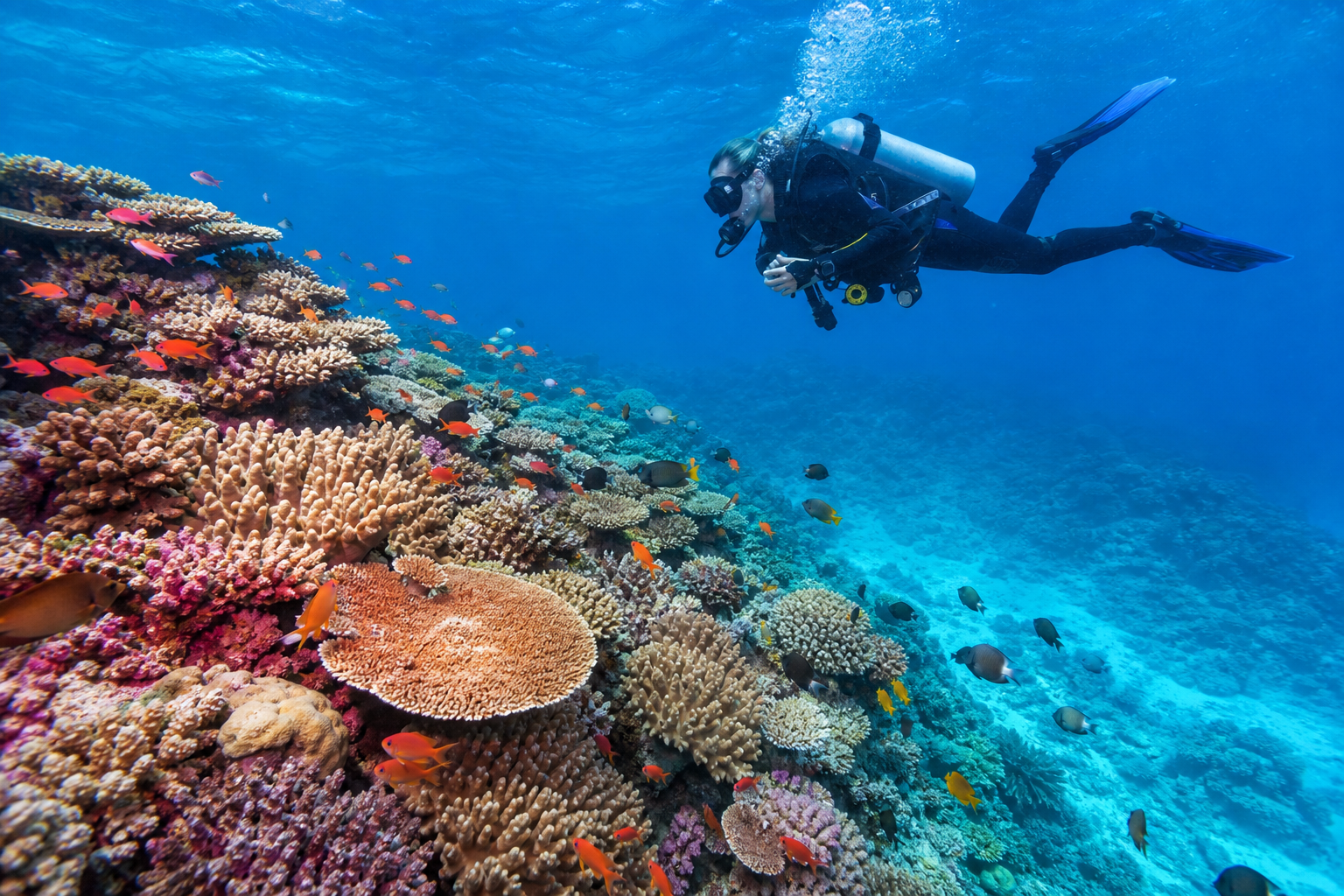
Australia is a bucket-list dive destination with everything from the world-famous Great Barrier Reef to whale shark encounters on Ningaloo and historic wrecks off Queensland. The distances are vast, so smart planning makes all the difference.
This guide covers the best dive spots in Australia, what each site is known for, who it is best suited to, and the ideal season to visit. Use it to design a reef-and-wreck itinerary or a focused marine-life trip in one region.
What Are the 10 Best Dive Spots in Australia?
The 10 best dive spots in Australia are Great Barrier Reef (Cod Hole/Ribbon Reefs), SS Yongala, Ningaloo Reef, Julian Rocks, Lord Howe Island, Port Douglas Outer Reef, Exmouth Navy Pier, South West Rocks, Rottnest Island, and Fish Rock Cave.
For the Great Barrier Reef, the clearest conditions are typically May–October, while Ningaloo's whale shark season runs roughly March–July.
Australia Diving Regions at a Glance
Australia's diving is split across huge coastlines. Choose a region based on marine life and season:
- Queensland (Great Barrier Reef): Cairns and Port Douglas offer ribbon reefs, walls and liveaboards; Yongala adds legendary wreck diving.
- Western Australia: Ningaloo Reef and Exmouth deliver whale sharks, manta rays and clear water.
- New South Wales: Julian Rocks and South West Rocks are known for sharks, seals and temperate reefs.
10 Best Dive Spots in Australia (Detailed)
1. Great Barrier Reef (Cod Hole & Ribbon Reefs)
The Great Barrier Reef is Australia's flagship dive destination with endless hard and soft coral gardens. The Ribbon Reefs north of Cairns are famous for clear water, drop-offs and giant potato cod at Cod Hole.
Liveaboards and longer day trips reach the most pristine sites. Expect turtles, reef sharks, giant clams and seasonal minke whales during winter.
Best for: All levels; liveaboards deliver the best conditions and variety.
2. SS Yongala (Townsville)
The SS Yongala is widely considered one of the world's best wreck dives. The 110-meter passenger ship lies upright in clear blue water and is now a thriving artificial reef packed with barracuda, giant groupers and sea snakes.
Quick info: Advanced Open Water recommended; currents can be strong and depth is around 30 meters.
3. Ningaloo Reef (Exmouth)
Ningaloo Reef is Australia's other UNESCO-listed reef and is famous for whale shark encounters. The reef sits close to shore, making it ideal for snorkel and dive combos.
Best for: Whale sharks, mantas and shore-accessible reef dives.
4. Julian Rocks (Byron Bay)
Julian Rocks is a marine reserve off Byron Bay known for leopard sharks, wobbegongs, turtles and rays. It is a top pick for temperate diving with easy boat access.
Best for: Winter leopard shark season (roughly June–September).
5. Lord Howe Island
Remote Lord Howe Island sits between Australia and New Zealand with crystal-clear water, soft corals and subtropical fish life. Limited visitor numbers keep the reefs pristine and uncrowded.
Best for: Advanced planners who want isolation and pristine reefs.
6. Port Douglas Outer Reef
Port Douglas offers quick access to the outer Great Barrier Reef, with clear water, vibrant coral bommies and frequent turtle sightings. Day trips are ideal for beginners and families.
Best for: Easy reef diving with short travel times.
7. Exmouth Navy Pier
The Exmouth Navy Pier is one of Australia's top macro and night-dive sites, covered in sponges, sea fans and critters like frogfish and octopus. Visibility is often excellent on a slack tide.
Tip: Dives are permit-controlled, so book in advance with a local operator.
8. South West Rocks (Fish Rock)
South West Rocks is famous for Fish Rock Cave, a massive swim-through packed with grey nurse sharks, turtles and rays. It is one of the best advanced dive sites in New South Wales.
Best for: Experienced divers comfortable with overhead environments.
9. Rottnest Island (Perth)
Rottnest Island has clear, calm water and a surprising number of dive sites close to Perth. Expect leafy sea dragons, sea lions and limestone ledges.
Best for: Easy day trips from Perth with reliable conditions.
10. Fish Rock Cave (South West Rocks)
Fish Rock Cave is a 125-meter-long tunnel that cuts through Fish Rock. Divers glide through cavernous chambers with rays, turtles and resident grey nurse sharks.
Best for: Advanced divers seeking iconic swim-throughs.
Australia Dive Spots Comparison Table
| Dive spot | Best season | Level | Highlights |
|---|---|---|---|
| Great Barrier Reef | May–Oct | All levels | Corals, turtles |
| SS Yongala | Apr–Sep | AOW+ | Wreck life |
| Ningaloo Reef | Mar–Jul | All levels | Whale sharks |
| Julian Rocks | Jun–Sep | OW–AOW | Leopard sharks |
| Lord Howe Island | Oct–May | AOW+ | Pristine reefs |
| Exmouth Navy Pier | Apr–Nov | OW+ | Macro critters |
| South West Rocks | Apr–Oct | AOW+ | Grey nurse sharks |
| Rottnest Island | Nov–Apr | All levels | Sea lions |
When Is the Best Time to Dive in Australia?
Seasons vary by coast, but these ranges are the most reliable:
- Great Barrier Reef: May–October is cooler with clearer water and calmer seas.
- Ningaloo & Exmouth: March–July for whale sharks; mantas are common year-round.
- New South Wales sites: April–October offers the best visibility and shark encounters.
Water temperatures range from 22–29°C depending on season and location.
How to Plan Your Australia Diving Trip
- Pick one region per trip: Distances are long; focus on Queensland, Western Australia or New South Wales for better logistics.
- Book liveaboards early: Ribbon Reefs and Cod Hole trips sell out during winter peak season.
- Match sites to certification: SS Yongala and Fish Rock Cave are best for Advanced Open Water divers.
- Plan for seasonal marine life: Whale sharks at Ningaloo peak March–July, while dwarf minke whales visit the GBR June–July.
- Compare dive centers: Use Be Underwater to compare prices, boat sizes and reviews.
FAQ: Diving in Australia
Is Australia good for beginner divers?
Yes. Port Douglas, the Great Barrier Reef and Rottnest Island have calm sites and plenty of training centers for Open Water courses.
Where can I see whale sharks in Australia?
Ningaloo Reef near Exmouth is Australia's top whale shark destination, with peak sightings from March to July.
Do I need Advanced Open Water to dive SS Yongala?
Advanced certification is strongly recommended due to depth and currents, though some operators accept experienced Open Water divers.
Related Diving Guides
Find Dive Centers in Australia
Compare PADI and SSI dive centers across Cairns, Port Douglas, Exmouth and Byron Bay — read reviews, check prices and book your next course or fun dive.
Search Australia Dive Trips