10 Best Dive Spots in Hawaii: Complete Guide (2026)
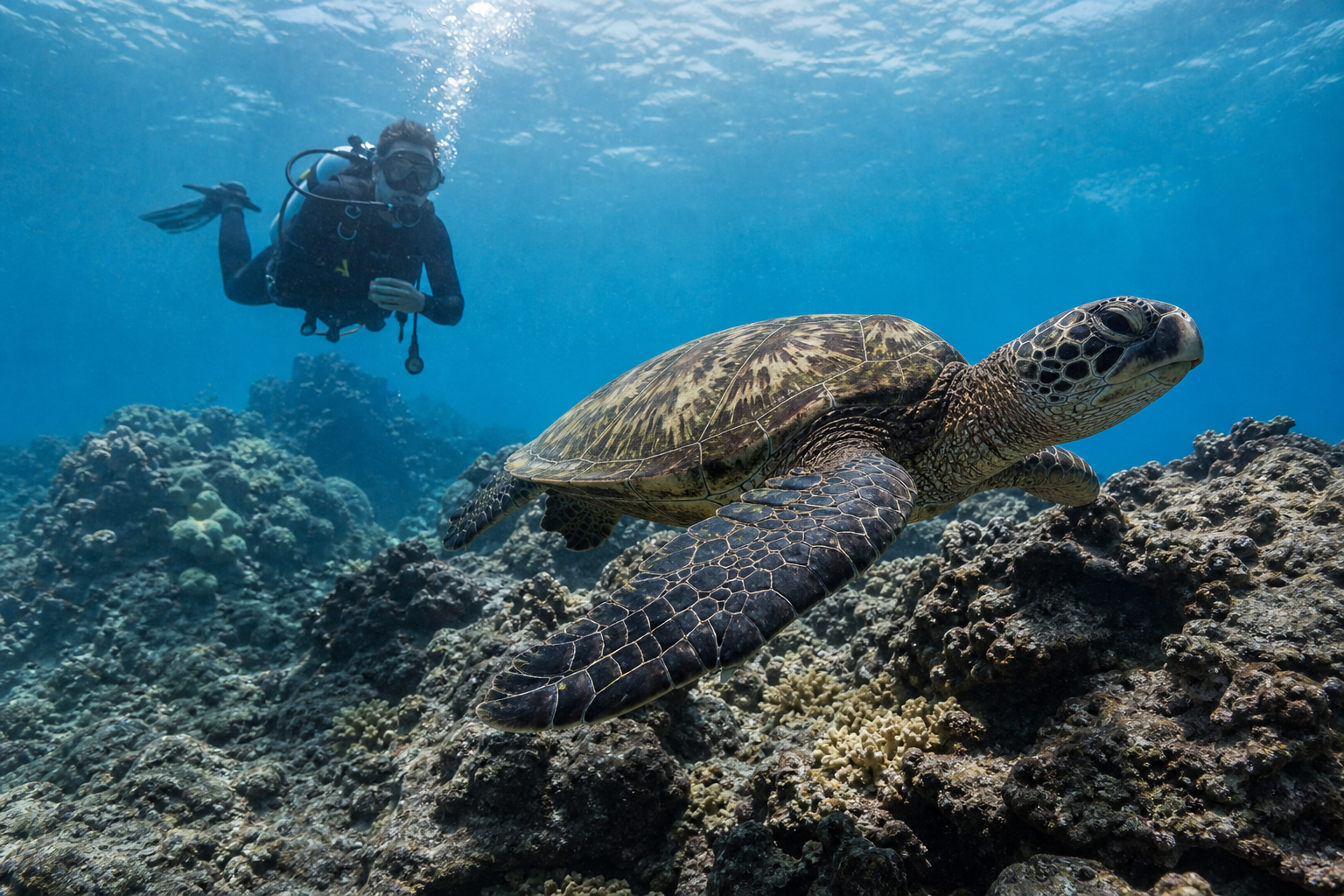
Hawaii is one of the most iconic dive destinations in the U.S., with crystal visibility, lava formations and year-round water temperatures. Each island has a distinct vibe, from Big Island mantas to Lanai cathedrals.
This guide covers the best dive spots in Hawaii, when to go and how to plan an island-hop diving itinerary.
What Are the 10 Best Dive Spots in Hawaii?
The 10 best dive spots in Hawaii are Molokini Crater, Kona manta night dive, Lanai Cathedrals, Maui Molokini back wall, Oahu Corsair wreck, Niihau, Big Island Black Water, Kauai Sheraton Caverns, Molokai, and Penguin Bank.
Conditions are best in summer (May–October), while winter can bring bigger surf and humpback whale encounters.
Hawaii Diving Regions at a Glance
Each island has different signature dives and seasonal conditions:
- Big Island (Kona): Manta night dives, black water pelagic dives.
- Maui: Molokini Crater, back wall drift dives and reef life.
- Lanai & Molokai: Cathedrals and steep island walls.
- Oahu: Wrecks, turtle cleaning stations and reef dives.
- Kauai & Niihau: Remote, advanced dives with excellent visibility.
10 Best Dive Spots in Hawaii (Detailed)
1. Molokini Crater
Molokini Crater is Hawaii's most famous dive site, with crystal visibility and reef fish inside the crater. It's a must-do for first-time visitors.
Best for: All levels; calm conditions and easy boat access from Maui.
2. Kona manta night dive
The Kona manta night dive is legendary: divers kneel on the sand as giant mantas swoop through the lights to feed on plankton.
Best for: All levels; calm, shallow night dive with big-animal action.
3. Lanai Cathedrals
Lanai Cathedrals features lava caverns with dramatic light beams and arches, creating one of Hawaii's most photogenic dive sites.
Best for: Intermediate divers; surge is common near the caverns.
4. Maui Molokini back wall
The Molokini back wall drops into deep blue with occasional pelagics, including sharks and eagle rays. This is the advanced side of Maui's iconic crater.
Best for: Advanced divers comfortable with depth and current.
5. Oahu Corsair wreck
The Corsair aircraft wreck off Oahu is a shallow dive with easy access and plenty of marine life on the wings and fuselage.
Best for: Beginner wreck divers and underwater photographers.
6. Niihau
Niihau is remote and pristine, offering crystal visibility, monk seals and lava formations. It's one of Hawaii's most advanced dive adventures.
Best for: Advanced divers; long boat ride and open ocean conditions.
7. Big Island Black Water
The Black Water dive in Kona is a nighttime pelagic drift where you hang in the deep ocean and watch bioluminescent creatures rise from the abyss.
Best for: Experienced divers comfortable with blue-water night dives.
8. Kauai Sheraton Caverns
Sheraton Caverns on Kauai has lava tubes, archways and frequent turtle encounters. It is a favorite for underwater photographers.
Best for: Intermediate divers; mild surge possible.
9. Molokai
Molokai offers dramatic walls and caves with fewer crowds. It is perfect for divers seeking a remote, laid-back experience.
Best for: Intermediate to advanced divers looking for solitude.
10. Penguin Bank
Penguin Bank between Maui and Molokai is a shallow plateau that attracts humpback whales in winter and offers excellent reef dives in summer.
Best for: Seasonal whale encounters and gentle reef dives.
Hawaii Dive Spots Comparison Table
| Dive spot | Best season | Level | Highlights |
|---|---|---|---|
| Molokini Crater | May–Oct | All levels | Clear visibility |
| Kona manta night | Year-round | All levels | Manta rays |
| Lanai Cathedrals | May–Oct | OW–AOW | Caverns, light beams |
| Molokini back wall | May–Oct | AOW+ | Deep wall |
| Oahu Corsair wreck | Year-round | Beginner | Shallow wreck |
| Niihau | Jun–Sep | AOW+ | Remote reefs |
| Big Island Black Water | Year-round | Advanced | Pelagic night |
| Kauai Sheraton Caverns | May–Oct | OW–AOW | Turtles, caverns |
When Is the Best Time to Dive in Hawaii?
Hawaii is a year-round destination, but conditions change with the seasons:
- Summer (May–Oct): Calmer seas, best visibility and ideal conditions for most islands.
- Winter (Nov–Apr): Bigger surf on north shores, with humpback whales migrating through.
- Night dives: Kona mantas run year-round with consistent sightings.
Water temperatures average 24–27°C, so a 3–5 mm wetsuit is comfortable.
How to Plan Your Hawaii Diving Trip
- Pick the right island: Kona for mantas, Maui for Molokini, Lanai for cathedrals.
- Book remote sites early: Niihau and Molokai trips are limited and weather dependent.
- Respect ocean conditions: Winter swells can cancel boat trips, especially on north shores.
- Plan for depth: Some walls and wrecks require AOW or deeper experience.
- Compare dive centers: Use Be Underwater to review operators and plan your itinerary.
FAQ: Diving in Hawaii
Is Hawaii good for beginner divers?
Yes. Molokini Crater, Oahu reefs and many Maui shore sites offer calm, clear water for new divers.
Where can I see manta rays in Hawaii?
Kona on the Big Island is world-famous for manta night dives with extremely high sighting rates.
When is whale season in Hawaii?
Humpback whales migrate through Hawaii from December to April, with peak sightings in January and February.
Related Diving Guides
Find Dive Centers in Hawaii
Compare Hawaii dive centers, read reviews and book your next island adventure.
Search Hawaii Dive Trips