10 Best Dive Spots in Japan: Okinawa, Izu & More (2026)
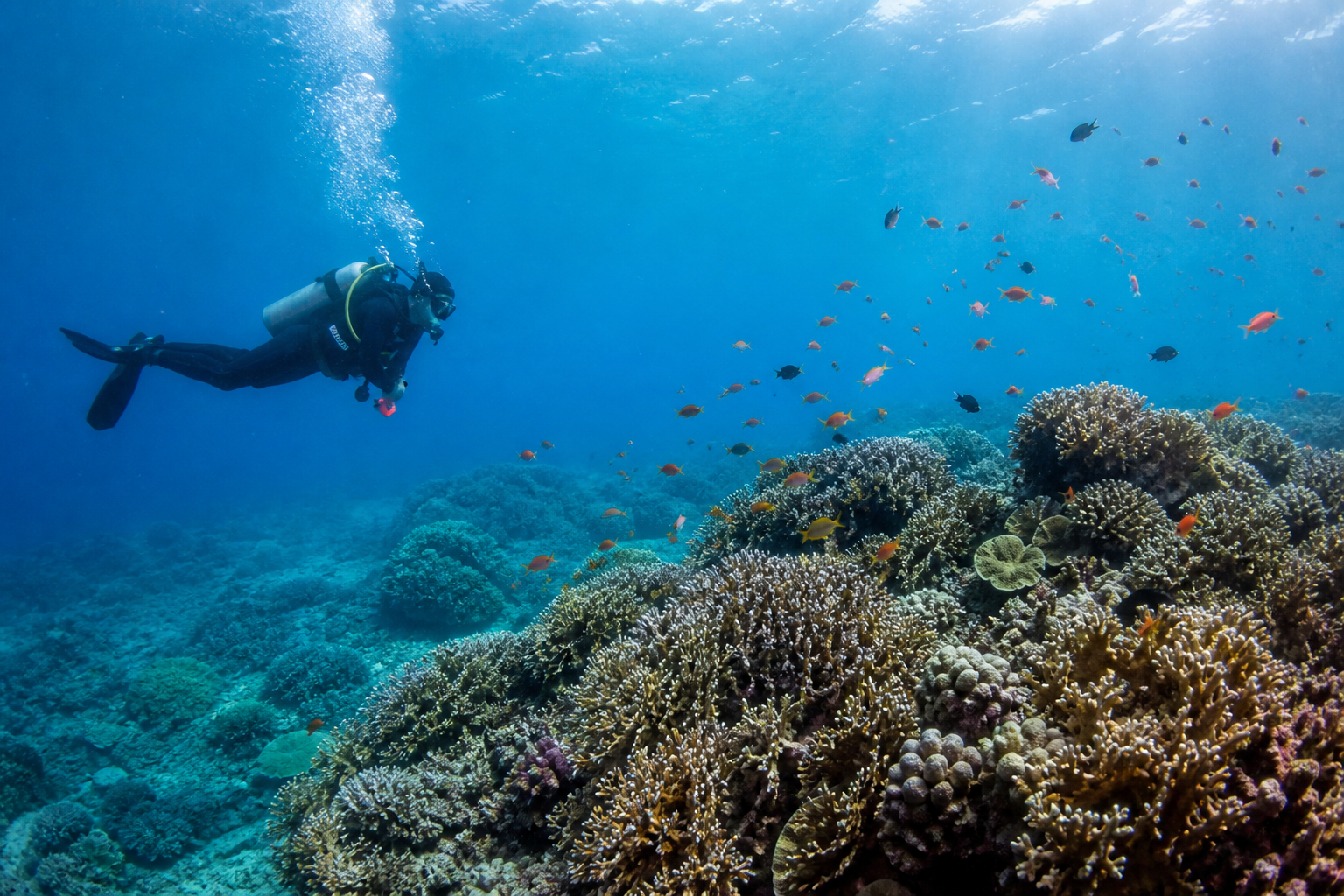
Japan is one of Asia's most diverse dive destinations. From the turquoise Kerama Islands and Ishigaki mantas in Okinawa to the accessible Izu Peninsula near Tokyo, the country offers extraordinary variety.
This guide covers the best dive spots in Japan, including the Miyako Blue Cave, mysterious Yonaguni Monument, classic shore dive at Osezaki, warm-current reefs at Kushimoto and more.
What Are the 10 Best Dive Spots in Japan?
The 10 best dive spots in Japan are the Kerama Islands, Miyako Blue Cave, Ishigaki manta spots, the Yonaguni Monument, the Izu Peninsula, Osezaki, Kushimoto, Sado Island, Amami Oshima and the Izu and Boso island chains near Tokyo.
Okinawa is best from March to November; mainland sites like Izu peak from June to October.
Japan Diving Regions at a Glance
Japan's best diving clusters into three main regions:
- Okinawa & Ryukyu Islands: Kerama, Miyako, Ishigaki, Yonaguni and Amami — coral, mantas and warm water.
- Honshu (Pacific coast): Izu Peninsula, Osezaki, Chiba and Boso islands — easy access from Tokyo.
- Kii Peninsula & Japan Sea: Kushimoto, Sado Island and cold-water biodiversity.
10 Best Dive Spots in Japan (Detailed)
1. Kerama Islands (Okinawa)
The Kerama Islands, a national park west of Okinawa main island, are famous for crystal-clear water (visibility often 30–50 meters), vibrant hard coral and hawksbill turtles. Zamami and Tokashiki are the main dive bases, with day boats from Naha also common.
Best for: All levels; Kerama is the classic Okinawa bucket-list dive destination.
2. Miyako Blue Cave
The Miyako Blue Cave (Blue Grotto) on Miyako Island is one of Japan's most photographed dives. Sunlight refracts through the cave entrance, bathing divers in an intense blue glow. Snorkelers and divers share the site, so early morning dives are recommended.
Quick info: Book early slots to avoid crowds; suitable for beginners with a guide.
3. Ishigaki Manta Spots
Ishigaki Island is Japan's manta ray capital. Cleaning stations at sites like Manta Scramble (Kabira Ishizaki) attract reef mantas year-round, with peak sightings from April to November. Strong currents mean this is best for experienced divers.
Best for: Advanced divers and underwater photographers chasing mantas.
4. Yonaguni Monument
Off Japan's westernmost island, the Yonaguni Monument is a massive submerged rock formation with terraced steps and pillars that spark debate about natural vs. human origin. Strong currents and depth (5–30 meters) make it an advanced dive, often combined with hammerhead season in winter.
Best for: Advanced divers; winter brings hammerhead sharks at nearby sites.
5. Izu Peninsula
The Izu Peninsula, reachable by train from Tokyo, is mainland Japan's diving hub. Volcanic reefs, hot-spring-heated bays and dozens of shore and boat sites make it ideal for weekend trips. Ito, Atami and Shimoda are popular bases.
Best for: Tokyo-based divers and travelers wanting mainland diving without flying to Okinawa.
6. Osezaki
Osezaki on the Izu Peninsula's west coast is Japan's most famous shore dive — a sheltered bay with seagrass, reef fish, nudibranchs and training platforms used by dive schools for decades. Calm conditions make it perfect for beginners and macro photography.
Best for: Beginners, training dives and relaxed shore diving.
7. Kushimoto
Kushimoto in Wakayama Prefecture sits where the warm Kuroshio Current meets rocky coastline, creating a unique mix of tropical and temperate species. Kushimoto Marine Park was Japan's first marine park and offers easy access to colorful reef fish rarely seen elsewhere on Honshu.
Best for: Divers who want warm-water species without flying to Okinawa.
8. Sado Island
In the Sea of Japan off Niigata, Sado Island offers a completely different diving experience — kelp forests, cold-water invertebrates and excellent visibility in autumn. It is a hidden gem for divers seeking Japan beyond the tropics.
Best for: Experienced divers and cold-water enthusiasts; drysuit recommended.
9. Amami Oshima
Between Kyushu and Okinawa, Amami Oshima has subtropical coral gardens, clear water and far fewer tourists than the main Okinawa islands. The island is a UNESCO World Natural Heritage site and offers a quieter alternative to Kerama crowds.
Best for: Divers who want pristine Ryukyu reefs with less tourism pressure.
10. Izu & Boso Island Chains
The offshore islands of Izu Oshima, Miyakejima, Hachijojima and the Boso Peninsula (Chiba) offer pelagic encounters, volcanic terrain and seasonal hammerhead and dolphin sightings. Ferry-accessible islands make multi-day dive trips easy from Tokyo.
Best for: Adventure divers exploring Japan's volcanic Pacific island chain.
Japan Dive Spots Comparison
| Dive spot | Best season | Level | Highlights |
|---|---|---|---|
| Kerama Islands | Apr-Nov | All levels | Clear coral gardens |
| Miyako Blue Cave | Apr-Oct | Beginner | Blue cavern light |
| Ishigaki mantas | Apr-Nov | AOW+ | Manta cleaning stations |
| Yonaguni Monument | Jun-Sep | AOW+ | Underwater terraces |
| Izu Peninsula | Jun-Oct | All levels | Tokyo weekend diving |
| Osezaki | Jun-Oct | Beginner | Classic shore dive |
| Kushimoto | Jun-Oct | OW-AOW | Kuroshio Current reefs |
| Sado Island | Aug-Nov | AOW+ | Cold-water kelp |
| Amami Oshima | Apr-Nov | All levels | Subtropical reefs |
| Izu/Boso islands | Jul-Oct | AOW | Volcanic pelagics |
When Is the Best Time to Dive in Japan?
Japan's dive season varies dramatically by region:
- Okinawa: March to November; water 24–29°C in summer with best visibility July–September.
- Izu & mainland: June to October; water 18–25°C — a 5 mm wetsuit works well.
- Special seasons: Yonaguni hammerheads in winter (Jan–Mar); Ishigaki mantas year-round.
Typhoon season (July–October) can affect Okinawa boats — build flexibility into your schedule.
How to Plan Your Japan Diving Trip
- Split Okinawa and mainland: Fly to Naha for Kerama/Ishigaki; take the train to Izu for Honshu diving.
- Book Ishigaki mantas early: Manta sites have limited daily slots and current restrictions.
- Carry cash on remote islands: Yonaguni and smaller islands may not accept cards everywhere.
- Check typhoon forecasts: Especially for summer Okinawa trips.
- Compare dive centers: Use Be Underwater to find English-speaking operators and course options.
FAQ: Diving in Japan
Is Japan good for beginner divers?
Yes. Osezaki, Miyako Blue Cave (with a guide), Kerama and many Okinawa sites offer calm conditions ideal for Open Water training and first fun dives.
Where can I see manta rays in Japan?
Ishigaki Island is the top manta destination, with cleaning stations at Manta Scramble and nearby sites. Mantas appear year-round with best conditions April to November.
Do I need to speak Japanese to dive in Japan?
Not in major tourist areas. Okinawa and Izu dive centers commonly offer English-speaking guides, but remote islands may have limited language support — confirm before booking.
Related Diving Guides
Find Dive Centers in Japan
Compare Japanese dive centers in Okinawa, Izu and beyond — read reviews and book your next reef or manta dive.
Search Japan Dive Trips