Best Time to Dive the Maldives: Season Guide
The best time to dive the Maldives is December through May, when the NE monsoon (Iruvai) keeps seas calm and visibility at its highest — typically 20–30 meters, with water temperatures around 27–29°C. The peak window inside that season is January to April. The other half of the year, May to November, brings the SW monsoon (Hulhangu): more rain and chop, but also the plankton blooms that draw manta rays and whale sharks into Hanifaru Bay from June through October.
Which season is "best" really depends on what you want to see. Divers chasing flat seas and maximum visibility should aim for the NE monsoon; divers chasing manta and whale shark encounters should target the SW monsoon. Some atolls, like Fuvahmulah and South Ari, deliver big-animal sightings almost regardless of the calendar.
When Is the Best Time to Dive the Maldives?
For the calmest seas and clearest water, dive between December and May, with January to April as the sweet spot — visibility regularly reaches 25–30 meters and surface conditions are the flattest of the year, making it the most comfortable window for liveaboards and channel diving.
For manta rays and whale sharks feeding in numbers, dive between June and October, when the SW monsoon pushes plankton-rich water onto the western atolls and Hanifaru Bay in Baa Atoll sees some of its largest aggregations. Water stays warm — 27–30°C — in every month, so the season you choose is about sea state and marine life, not temperature.
Maldives Diving Conditions, Month by Month
| Month | Monsoon | Water temp | Visibility | Highlights |
|---|---|---|---|---|
| January | NE (Iruvai) | 27–29°C | 25–30 m | Peak season — calm seas, best all-round visibility |
| February | NE (Iruvai) | 27–29°C | 25–30 m | Dry, calm conditions continue; great channel diving |
| March | NE (Iruvai) | 28–29°C | 25–30 m | Warm, calm water; still peak season |
| April | NE (Iruvai) | 28–30°C | 20–30 m | Last calm month before the monsoon shift |
| May | SW (Hulhangu) begins | 28–30°C | 15–25 m | Rain increases, plankton starts building on western atolls |
| June | SW (Hulhangu) | 28–29°C | 15–20 m | Manta feeding builds at Hanifaru Bay |
| July | SW (Hulhangu) | 27–29°C | 15–20 m | Peak manta and whale shark aggregations at Hanifaru Bay |
| August | SW (Hulhangu) | 27–29°C | 15–20 m | Rainiest month; Hanifaru Bay still very active |
| September | SW (Hulhangu) | 27–29°C | 15–25 m | Hanifaru aggregations continue, slightly calmer seas |
| October | SW (Hulhangu) | 27–29°C | 15–25 m | Last reliable month for Hanifaru Bay feeding events |
| November | Transition | 27–29°C | 15–25 m | Seas start to calm as the NE monsoon returns |
| December | NE (Iruvai) begins | 27–29°C | 20–30 m | Visibility improving fast; high season starts |
NE Monsoon (December–May): Calm Seas and Peak Visibility
The Iruvai season is the classic postcard version of the Maldives: light winds, flat surface conditions and visibility that regularly hits 25–30 meters, especially from January through April. It is the easiest season for boat handling, channel entries and photography, and the most popular window for liveaboards covering the central atolls.
Good to know: this is also high season, so liveaboard cabins and dates book out earliest for December–April departures.
SW Monsoon (May–November): Plankton, Mantas and Whale Sharks at Hanifaru Bay
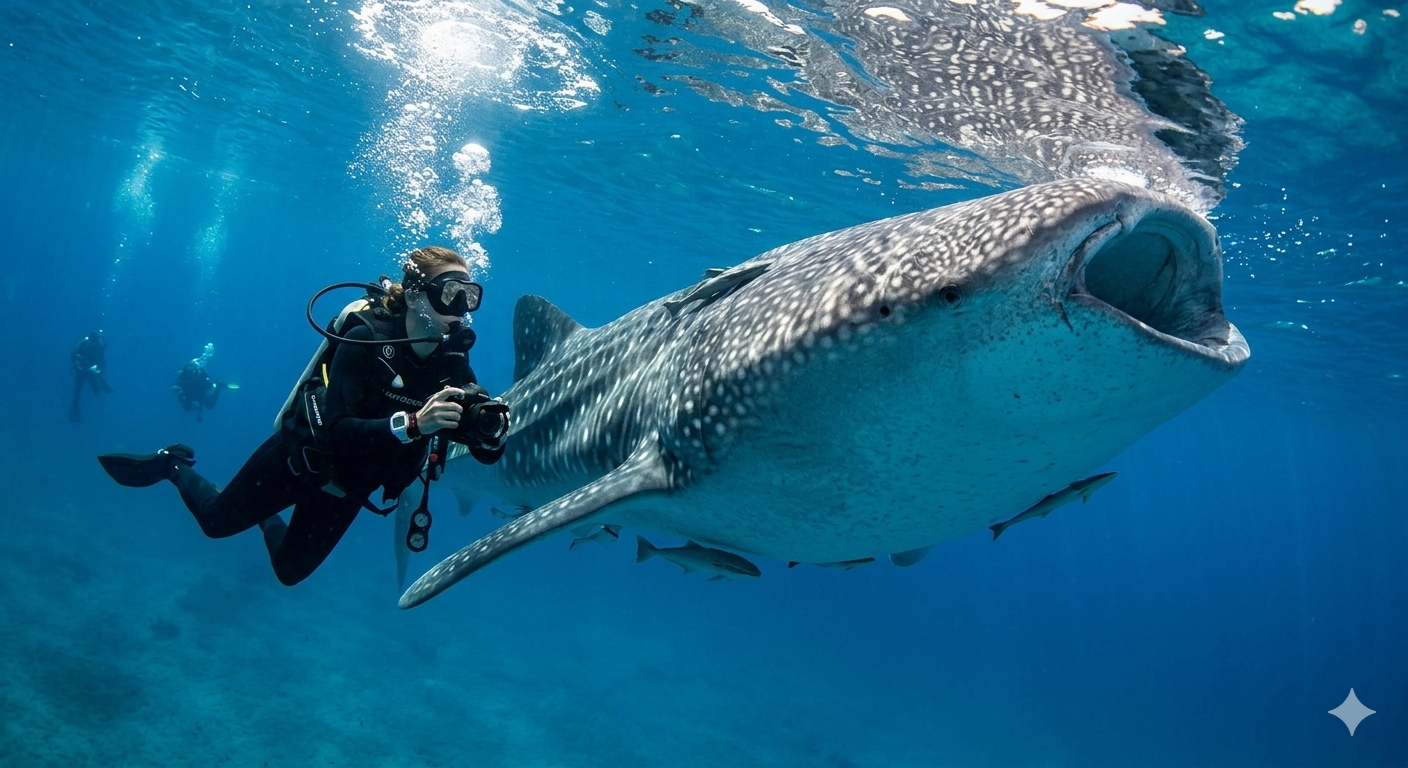
The Hulhangu season brings more rain and choppier surface conditions, particularly on the eastern side of the atolls, and visibility can drop to 15–20 meters as plankton blooms move in. That same plankton is exactly what draws large manta ray and whale shark feeding events into Hanifaru Bay, a UNESCO Biosphere Reserve in Baa Atoll, with aggregations peaking from June to October.
Note: Hanifaru Bay itself is a protected marine area — encounters there are snorkel only, scuba diving is not permitted inside the bay.
Fuvahmulah: Tiger Sharks Year-Round, Regardless of Season
Fuvahmulah sits alone in the deep south, outside the usual atoll structure, and its steep drop-offs attract tiger sharks and thresher sharks on dives that run more or less the same way in any month. It is a good option if your travel dates do not line up with either monsoon's ideal window. Read the full Fuvahmulah diving guide.
South Ari Atoll: Whale Sharks Every Month of the Year
Unlike Hanifaru Bay's seasonal aggregations, South Ari Atoll has a resident whale shark population that is sighted in the same stretch of water throughout the year, making it the most reliable place in the Maldives to plan a whale shark dive without timing it to a specific season. Nearby Dhigurah is one of the main bases for these trips.
Choosing a Liveaboard Route by Season: Central Atolls vs. the Deep South
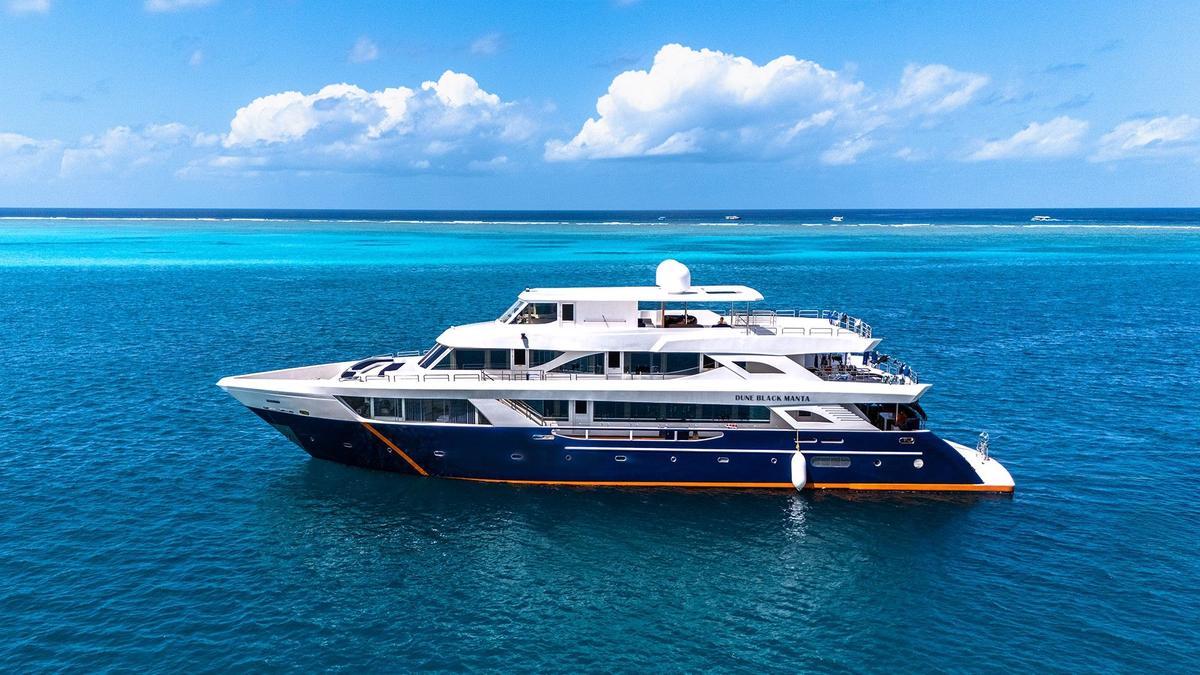
Central-atoll routes — covering Male, Ari, Baa and Lhaviyani — run comfortably in both monsoons and are the easiest starting point for a first Maldives liveaboard. Boats like the Maldives Aggressor II and DUNE Black Manta work these central atolls year-round, timing itineraries to hit Hanifaru Bay during the SW monsoon.
Deep-south routes to Addu, Fuvahmulah and Huvadhoo cross open equatorial channel water, so most operators — including boats like the DUNE Aurora and Salvora— schedule these longer trips for the calmer NE monsoon months, roughly November through April.
Currents: channel (kandu) diving throughout the Maldives can run strong regardless of season, so most liveaboard itineraries recommend Advanced Open Water certification, with Nitrox a common add-on for multi-dive days.
Practical Tips for Timing Your Trip
- Get Advanced Open Water and consider Nitrox before you go — the channel diving the Maldives is known for involves currents that most itineraries expect you to be ready for.
- Pack a 3mm wetsuit, not a thicker one. Water sits at 27–30°C in every month, so thermal protection is a minor packing decision here.
- Book Hanifaru-season trips early. If manta and whale shark feeding events are the priority, June–October departures to Baa Atoll fill up well ahead of time.
- Match your route to the season. Central-atoll itineraries run year-round; deep-south routes to Fuvahmulah and Addu are easiest in the calmer NE monsoon months.
- Compare boats and exact departure dates on Be Underwater. Bookings go through manual approval with the operator, and pricing shows every mandatory extra up front with no added booking fees.
FAQ: Best Time to Dive the Maldives
What is the best month to dive in the Maldives?
January to April is generally considered the best window — the NE monsoon keeps seas calm and visibility at its highest, typically 25–30 meters, with water temperatures around 27–29°C.
Can you see whale sharks in the Maldives year-round?
Yes. South Ari Atoll has a resident whale shark population that is present in the same general area every month of the year, unlike the seasonal aggregations at Hanifaru Bay.
When is Hanifaru Bay open for manta and whale shark encounters?
Feeding aggregations at Hanifaru Bay in Baa Atoll peak from June to October, driven by plankton brought in by the SW monsoon. The bay itself is a marine protected area where only snorkeling is allowed, not scuba diving.
Do I need Advanced Open Water certification to dive the Maldives?
Many house-reef and lagoon sites are fine for Open Water divers, but the channel (kandu) diving the Maldives is known for involves strong currents, so Advanced Open Water plus Nitrox is recommended for most liveaboard itineraries.
What is the water temperature in the Maldives?
Water stays warm year-round, roughly 27–30°C, so a 3mm wetsuit is enough for most divers even in the cooler SW monsoon months.
Is the Maldives worth diving during the rainy season (May–November)?
Yes — the SW monsoon brings shorter, more frequent rain squalls and choppier surface conditions, but it is also the season that feeds the manta and whale shark aggregations at Hanifaru Bay, so it trades a bit of comfort for big-animal encounters.
Related Guides
Find a Maldives Liveaboard for Your Season
Compare Maldives liveaboards by route and departure date, check per-cabin prices and book online on Be Underwater.
Browse Maldives Liveaboards