Best Beginner Dive Sites in Europe: Calm Spots for New Divers (2026)
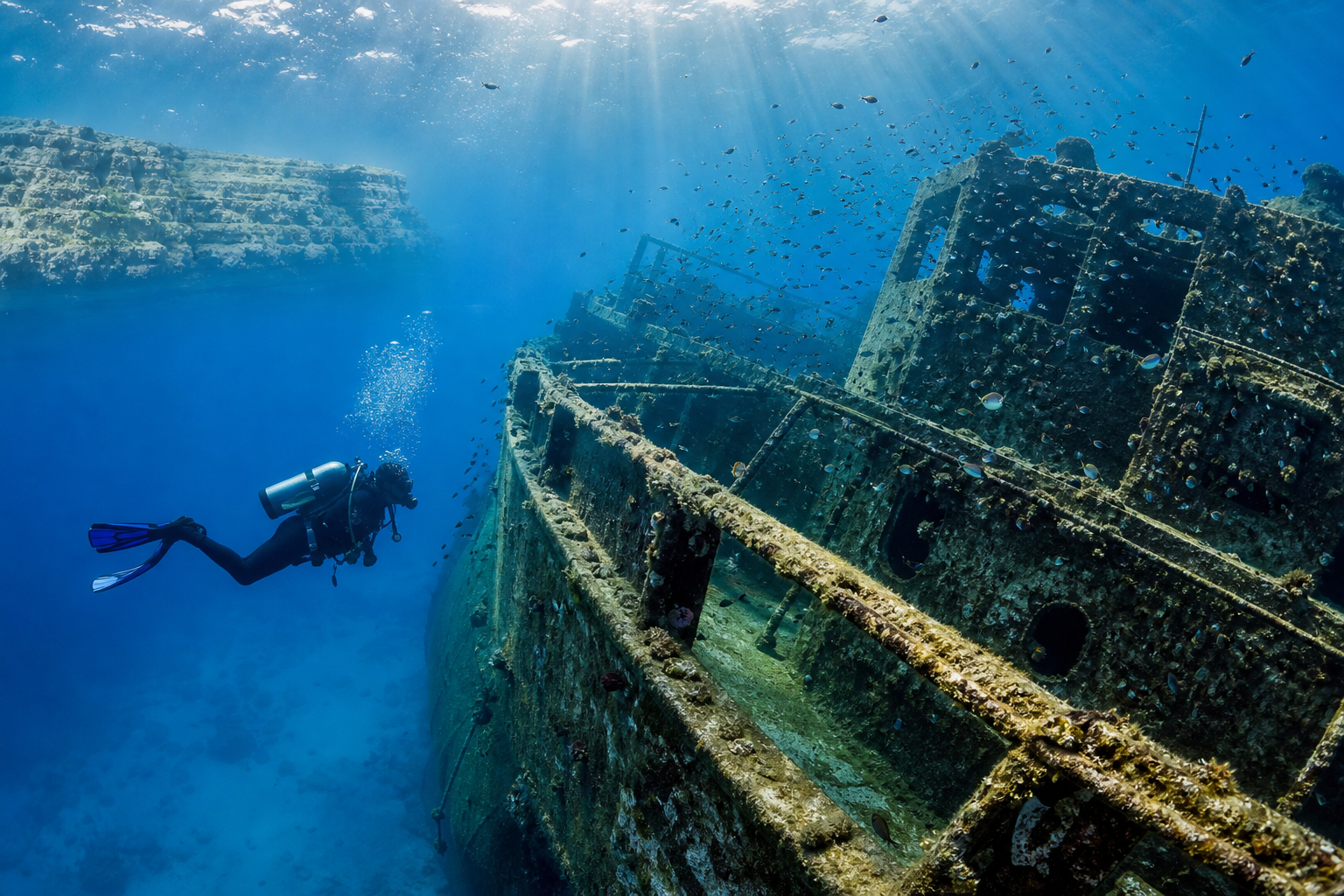
Europe is an excellent place to learn scuba diving. From Malta's shallow wrecks to Tenerife's turtle bays and Croatia's calm Adriatic reefs, many sites offer protected water, good visibility and professional training centers close to home.
This guide lists the best beginner dive sites in Europe — ideal for Open Water courses, discover scuba experiences and your first post-certification fun dives.
What Are the Best Beginner Dive Sites in Europe?
The best beginner dive sites in Europe include Cirkewwa (Malta), El Puertito (Tenerife), Korcula reefs (Croatia), Naxos and Zakynthos (Greece), Medes Islands shallow sites (Spain), Zenobia shallow sections (Cyprus), Algarve (Portugal), Sardinia sheltered bays, Azores beginner sites, and Gozo Inland Sea (Malta).
Most sites are best from May to October, though the Canary Islands and Malta offer year-round training.
Why Europe Works for New Divers
Beginner-friendly European diving typically shares these traits:
- Shallow, sheltered bays: Protected from swell — ideal for confined water and first open water dives.
- Short travel from home: No long-haul flights required for UK and continental European learners.
- Dense dive center networks: PADI, SSI and CMAS schools in Malta, Spain, Greece and Croatia.
10 Best Beginner Dive Sites in Europe (Detailed)
1. Cirkewwa Shallow Reef (Malta)
Cirkewwa on Malta's north tip combines easy shore access with shallow reef sections perfect for training. The P29 wreck and arch formations sit nearby for post-certification dives.
Best for: First open water dives; calm conditions and excellent instructor infrastructure.
2. El Puertito (Tenerife, Spain)
El Puertito is one of Europe's best beginner sites — a shallow bay with sea turtles, sandy bottom and almost no current. Many Tenerife centers use it for Open Water courses year-round.
Best for: Warm-water training without leaving Europe; great for nervous first-timers.
3. Korcula Reefs (Croatia)
The island of Korcula offers gentle Adriatic reefs with clear water and minimal current. Shallow rocky slopes are ideal for skill practice and relaxed fun dives after certification.
Best for: Summer holiday courses; combine diving with Croatian island hopping.
4. Naxos & Zakynthos (Greece)
Naxos and Zakynthos feature sheltered bays with warm Aegean and Ionian water. Shallow reefs, easy boat dives and loggerhead turtle habitats make both islands beginner favorites.
Best for: Mediterranean Open Water courses; peak season June to September.
5. Medes Islands Shallow Sites (Spain)
While the Medes are famous for advanced diving, several shallow protected areas around Estartit suit new divers. Clear water and dense fish life reward beginners on calm days.
Best for: Post-certification fun dives in a world-class marine reserve.
6. Zenobia Shallow Sections (Cyprus)
The MV Zenobia ferry wreck is usually an advanced dive, but guided tours of the shallow bow and truck deck (16–18 m) let newer divers experience a legendary wreck safely with a professional.
Best for: Certified divers wanting an iconic wreck without deep penetration.
7. Algarve (Portugal)
The Algarve coast offers sheltered coves near Lagos and Portimão with rocky reefs and octopus-filled shallows. Summer water reaches 20–22°C with generally calm Atlantic conditions.
Best for: UK and Iberian divers seeking affordable European training close to home.
8. Sardinia Sheltered Bays
Sardinia's northeast coast (Costa Smeralda and Tavolara Marine Reserve edges) has protected bays with sandy entries and gentle slopes — perfect for discover scuba and Open Water training.
Best for: Family-friendly diving holidays; calm Mediterranean summer conditions.
9. Azores Beginner Sites (São Miguel & Faial)
The Azores are better known for advanced diving, but sheltered sites like Vila Franca islet (São Miguel) and Porto Pim Bay (Faial) offer calm, shallow training in volcanic Atlantic water.
Best for: Adventurous beginners; cooler water (17–22°C) — plan a thicker wetsuit.
10. Gozo Inland Sea (Malta)
Gozo's Inland Sea is a lagoon connected to the open Mediterranean through a tunnel. Shallow lagoon dives suit beginners; the tunnel exit requires calm conditions and should only be attempted with an experienced guide after certification.
Best for: Memorable post-certification dives — approach the tunnel carefully and only with a local guide.
Beginner Dive Sites in Europe Comparison
| Site | Best season | Max depth | Why beginners love it |
|---|---|---|---|
| Cirkewwa | Apr-Nov | 5–18 m | Shore access, calm reef |
| El Puertito | Year-round | 5–12 m | Turtles, no current |
| Korcula | May-Oct | 5–20 m | Clear Adriatic water |
| Naxos / Zakynthos | Jun-Sep | 5–18 m | Warm, sheltered bays |
| Medes shallow | May-Oct | 8–15 m | Protected reserve |
| Zenobia shallow | Apr-Nov | 16–18 m | Iconic wreck intro |
| Algarve | Jun-Sep | 5–15 m | Affordable training |
| Sardinia | Jun-Sep | 5–12 m | Sheltered coves |
| Azores | Jun-Oct | 5–15 m | Volcanic scenery |
| Gozo Inland Sea | Apr-Nov | 5–10 m | Unique lagoon dive |
When Is the Best Time for Beginner Diving in Europe?
Seasonality varies by region, but these patterns hold for most beginner sites:
- Mediterranean (Malta, Greece, Croatia, Spain): May to October for warmest water (20–26°C) and calm seas.
- Canary Islands: Year-round at 18–24°C — the most reliable winter training option in Europe.
- Atlantic (Portugal, Azores): June to September for the calmest surface conditions.
Shoulder months (May and September) often combine good visibility with fewer crowded dive boats.
How to Plan Your First European Dive Trip
- Pick calm over famous: A sheltered bay beats a legendary deep wreck for your first dives.
- Check certification agency fit: Malta and Spain have dense PADI/SSI networks; compare agencies before booking.
- Allow extra days: Weather cancellations happen — build buffer days into Mediterranean trips.
- Confirm equipment rental: Most European centers include full kit during courses; verify wetsuit thickness for your season.
- Compare dive centers on Be Underwater: Read reviews focused on beginner instruction quality, not just price.
FAQ: Beginner Diving in Europe
Where is the best place for beginner scuba divers in Europe?
Malta and Tenerife consistently rank highest — both offer calm sites, year-round or long-season diving, and hundreds of experienced instructors.
Can I get certified in Europe in winter?
Yes. The Canary Islands (Tenerife, Gran Canaria) and Malta offer winter courses. Mediterranean mainland sites are mostly seasonal from spring to autumn.
Do I need to speak the local language?
No. Major dive destinations in Malta, Greece, Croatia and Spain operate in English, German and other tourist languages. Confirm language when booking.
Related Diving Guides
Explore More European Dive Destinations
Ready to plan beyond beginner sites? Browse our full guide to the best places to scuba dive in Europe.
European Diving Guide