Nitrox Certification Guide: Everything You Need to Know About Enriched Air
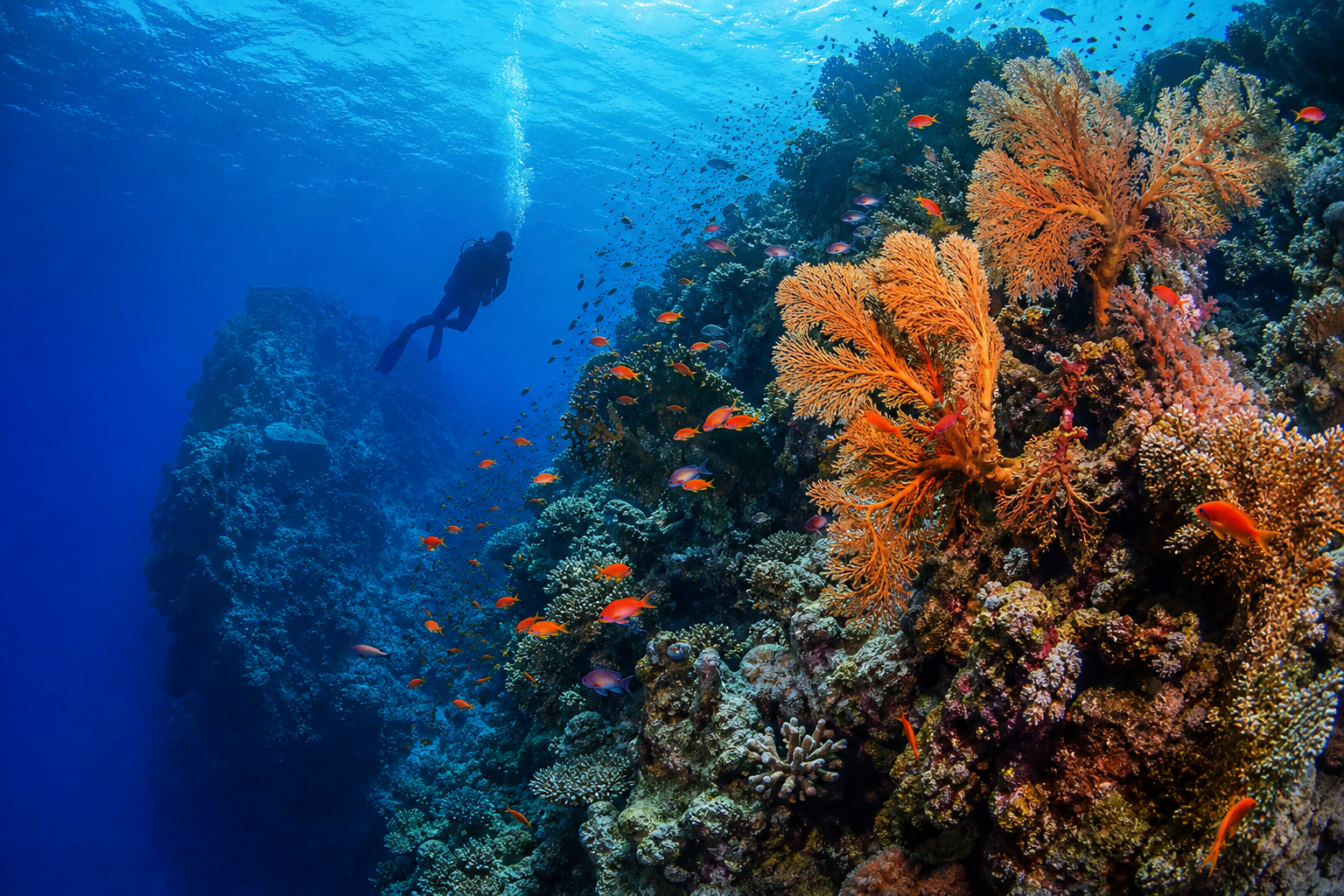
Nitrox (Enriched Air Nitrox, or EANx) is the most popular specialty certification in recreational scuba diving. By breathing gas with more oxygen and less nitrogen than regular air, you extend your no-decompression limits and often feel less tired after repetitive dives — without going deeper.
This guide covers what Nitrox is, how certification works across PADI, SSI and NAUI, common gas mixes, safety limits and whether it is worth getting certified before your next dive trip.
What Is Nitrox and Should You Get Certified?
Nitrox is breathing gas with 22–40% oxygen (regular air is 21% O₂ / 79% N₂). The most common recreational mixes are EAN32 (32% oxygen) and EAN36 (36% oxygen). Less nitrogen means longer bottom times at the same depth and reduced nitrogen loading on multi-dive days.
Yes — Nitrox is worth it if you do liveaboards, wreck weeks or 3–4 dives per day on vacation. The course takes 1 day, costs $150–$300, and requires Open Water certification as a prerequisite. Trade-off: higher oxygen means a shallower maximum depth (MOD) due to oxygen toxicity limits.
Air vs Nitrox: Key Differences
| Feature | Regular air (21% O₂) | Nitrox EAN32 (32% O₂) | Nitrox EAN36 (36% O₂) |
|---|---|---|---|
| Oxygen content | 21% | 32% | 36% |
| Approx. MOD (1.4 PO₂) | 56 m / 184 ft | 33 m / 108 ft | 29 m / 95 ft |
| NDL at 18 m (60 ft) | ~56 min | ~95 min | ~125 min |
| NDL at 30 m (100 ft) | ~20 min | ~30 min | Not recommended |
| Best for | All depths to 40 m | Recreational diving to 30 m | Shallow reef dives (≤25 m) |
| Certification required? | No (Open Water) | Yes — Nitrox cert | Yes — Nitrox cert |
NDL figures are approximate no-decompression limits. Always use your dive computer and agency tables for planning.
Nitrox Certification by Agency
| Agency | Course name | Dives required | Typical cost | Notes |
|---|---|---|---|---|
| PADI | Enriched Air Diver | None | $150–$250 | Theory + O₂ analysis; most popular |
| SSI | Extended Range Nitrox | 2 dives | $180–$300 | Includes in-water training |
| NAUI | Nitrox Diver | Optional | $150–$280 | Instructor flexibility |
| SDI | Computer Nitrox | Optional | $150–$250 | Digital-first approach |
| RAID | Nitrox Diver | 2 dives | $150–$280 | Free online theory |
Compare all agencies: PADI vs SSI vs NAUI compared.
What You Learn in a Nitrox Course
1. Oxygen Physics & Partial Pressure
You learn how partial pressure of oxygen (PO₂) increases with depth — and why exceeding 1.4 bar PO₂ (working limit) or 1.6 bar (contingency) risks oxygen toxicity (convulsions underwater). This is the core safety concept behind Nitrox diving.
Key skill: Calculate Maximum Operating Depth (MOD) for any mix. EAN32 MOD ≈ 33 m at 1.4 PO₂.
2. Analyzing & Labeling Tanks
Before every Nitrox dive you must analyze the tank with an oxygen analyzer, confirm the percentage matches your dive plan, and label the tank with mix, MOD and your initials. This hands-on skill is part of every agency's course — even PADI's no-dive version.
3. Dive Planning with EANx
You plan dives using Nitrox-specific tables or a dive computer set to the correct mix. The goal: extend bottom time within oxygen limits while staying shallower than the MOD. On liveaboards, divemasters often plan the day around 32% Nitrox for all recreational dives.
4. Equipment Considerations
Recreational Nitrox up to 40% O₂ can use standard scuba equipment (regulators, BCD, wetsuit) at most dive centers. Higher oxygen percentages above 40% require oxygen-clean equipment — not relevant for recreational EAN32/EAN36 diving.
Benefits vs Risks of Nitrox
Benefits
- Longer no-decompression limits at same depth
- Less nitrogen loading on repetitive dives
- Reduced post-dive fatigue on dive trips
- Shorter surface intervals between dives
- Often available free or cheap on liveaboards after cert
Risks & limits
- Shallower MOD — not for deep diving
- Oxygen toxicity if depth limits exceeded
- Must analyze every tank before diving
- Wrong mix in computer = dangerous profile
- Slightly higher tank fill cost at some centers
Best Destinations for Nitrox Diving
Nitrox shines on trips with multiple dives per day. Top destinations where Nitrox is standard or widely available:
- Red Sea, Egypt — liveaboards offer free or low-cost EAN32
- Thailand — Similan liveaboards and Koh Tao day boats
- Indonesia — Komodo and Raja Ampat liveaboards
- Mexico — Cozumel wall diving with 3–4 dives daily
- Wreck diving trips — repetitive dives on the Thistlegorm and more
Tip: Get Nitrox certified before your trip — many liveaboards require proof of certification to fill EANx tanks.
FAQ: Nitrox Certification
What is Nitrox certification?
Nitrox (Enriched Air Nitrox or EANx) certification teaches you to dive with gas mixes containing 22–40% oxygen instead of 21% air. You learn oxygen exposure limits, maximum operating depth (MOD), analyzing tanks and dive planning for longer, safer bottom times.
Is Nitrox worth it?
Yes for most recreational divers who do multiple dives per day or repetitive diving on trips. Nitrox reduces nitrogen loading, extending no-decompression limits and often reducing post-dive fatigue. The course is short and affordable ($150–$300).
Do you need dives for Nitrox certification?
PADI Enriched Air Diver requires no dives — theory and practical skills only. SSI Extended Range Nitrox typically includes two training dives. NAUI Nitrox Diver may include optional dives depending on the instructor.
What Nitrox mix is most common?
EAN32 (32% oxygen) and EAN36 (36% oxygen) are the most common recreational mixes. Many dive centers in the Red Sea, Caribbean and Southeast Asia offer Nitrox as standard on liveaboards and day boats.
Can beginners use Nitrox?
You need Open Water certification first. Many divers get Nitrox certified immediately after Open Water or Advanced Open Water — it is one of the most popular specialty courses worldwide.
Related Guides
Find Nitrox Courses on Be Underwater
Compare Nitrox and Enriched Air courses at dive centers worldwide — read reviews and book securely.
Search Nitrox Courses